Mario Minichiello · woodcut · visual inquiry
Mario Minichiello has spent thirty years entering scenes — markets, conflicts, institutions, communities — and drawing before he understood what he was drawing. The act of drawing forced the question. The image that emerged was never what he expected. That is the point.
FASTlab begins every engagement the same way. Not with frameworks or solutions, but with genuine inquiry into what is actually happening, what is actually uncertain, and what a decision would actually require.
Illustration is not a record of ideas already formed. It is a method of forming them.
Complex systems cannot be adequately described in words alone. They must be drawn — not as finished diagrams, but as working maps that expose relationships, tensions, gaps and hidden assumptions.
The Evidence Intelligence Engine began as a drawing. The evidence chain began as a drawing. Every Knowledge Object architecture began as a drawing. The visual form precedes the engineered form — always.
This is not because FASTlab prefers drawing to thinking. It is because drawing is a form of thinking that engineering alone cannot replicate. It holds ambiguity open long enough to understand it.
The sketch that becomes an architecture is not a simplification of the architecture. It is a different kind of knowledge — one that engineering must learn to read.
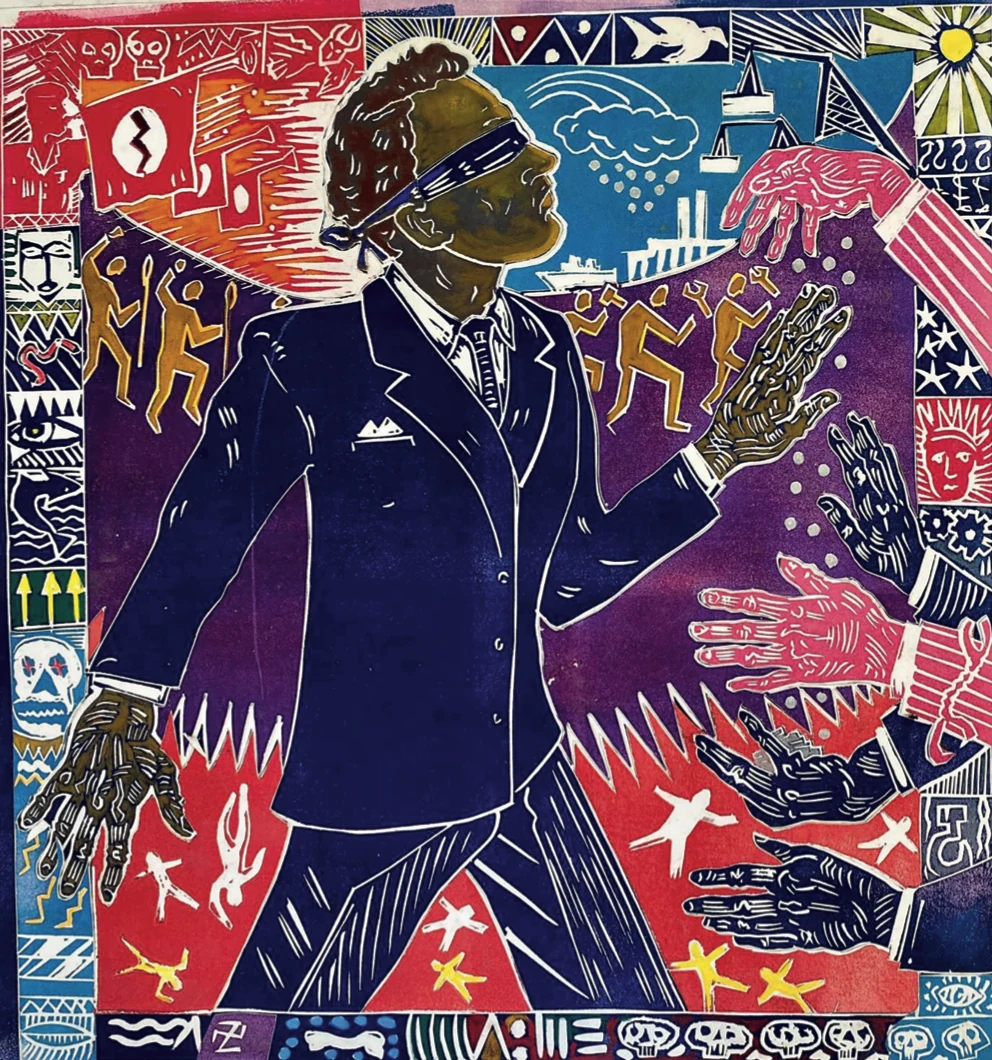
Selected works · Mario Minichiello · thinking made visible
Sonic practice · Jon Drummond
Some emerge through rhythm, repetition, interruption and change over time. They have to be listened to — and sometimes performed.
Jon Drummond is a composer, sound artist and FASTlab researcher. His practice explores how sound, gesture, robotics and artificial intelligence can create new forms of interaction between people, instruments and responsive systems.
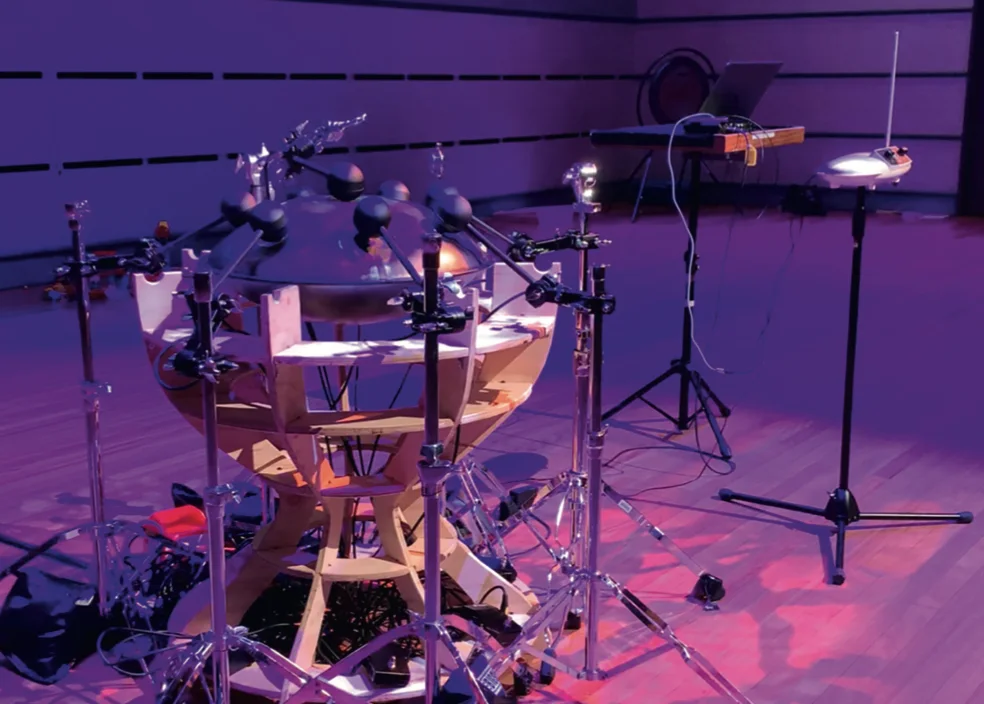
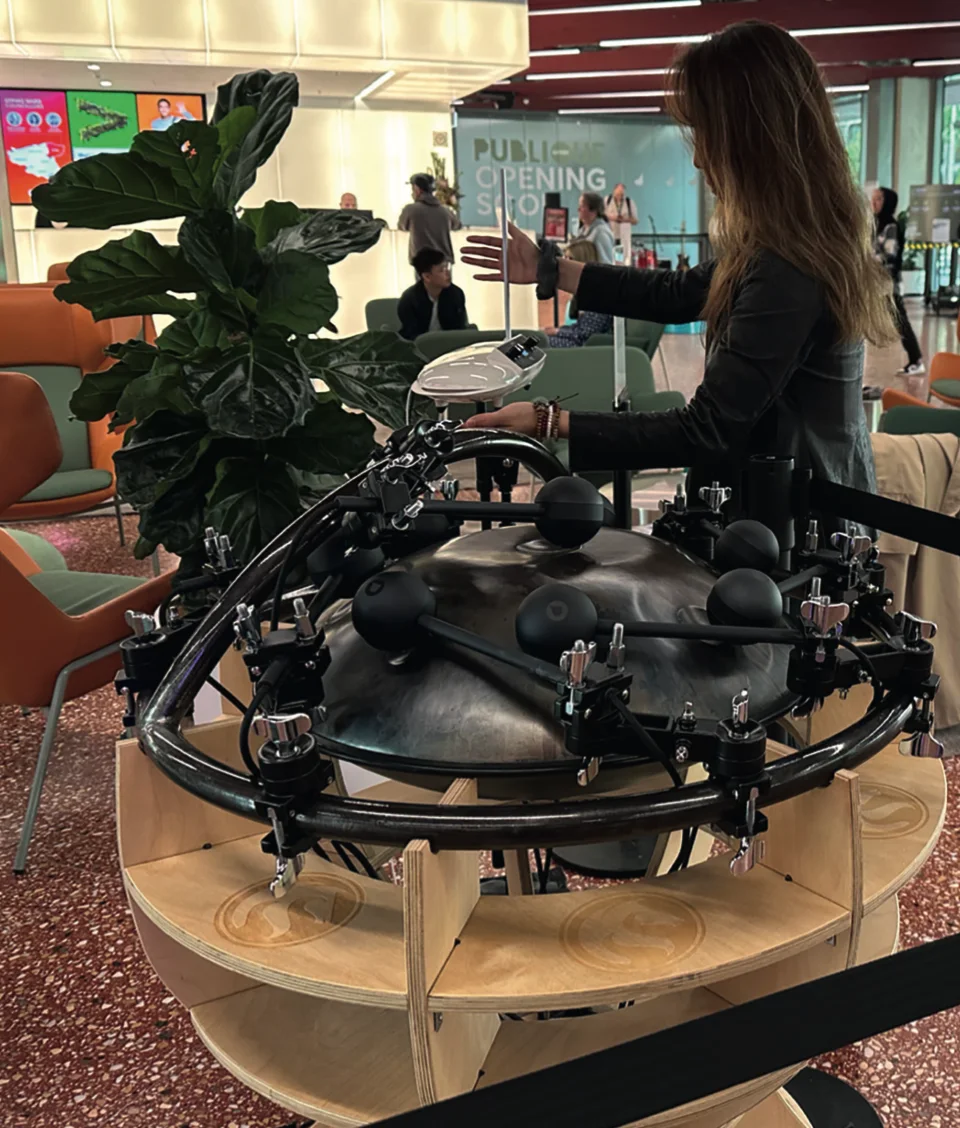
In his gesture-interactive robotic handpan, movement is detected without touch. AI interprets the performer's gesture, robotic mallets respond in real time, and the instrument becomes something between tool, collaborator and performer. The system emerged through practice: build, play, listen, test and refine.
For FASTlab, the lesson reaches beyond music. Complex systems unfold through time. Listening can reveal intensity, recurrence, hesitation and response that a static representation may miss.
Sonic practice is not a soundtrack added after the analysis. It is a way of discovering how a system behaves.
Jon Drummond · robotic handpan · gesture interaction · human–machine musical collaboration
Drawing makes relationships visible. Sound makes pattern and change perceptible through time. Both are ways of entering complexity before deciding what it means.
Critical media practice · Craig Hight
We do not encounter evidence in a raw state. We encounter it through stories, images, interfaces, reports, headlines, platforms and institutions. Each selects. Each orders. Each emphasises. Each leaves something outside the frame.
Craig Hight's research across documentary, audiences, misinformation and software literacy asks how people decide what is authentic, how media forms shape meaning, and why some accounts become trustworthy enough to act upon.
At FASTlab, this adds a necessary discipline to evidence intelligence. We ask not only what the evidence says, but what the account is doing.
A compelling account is not necessarily a trustworthy one. Understanding depends not only on evidence, but on how evidence is presented, interpreted and trusted.
Move through the frames. The artwork remains the same; selection, emphasis and context alter what becomes most noticeable.
A viewer begins making meaning before any explanation appears. Attention moves to the central figure, the reaching hands, the symbols at the edge, the contrasting colours, the posture and the blindfold. Interpretation has already begun.
Mario helps us look carefully. Jon helps us listen for pattern and change. Craig helps us question the frame through which reality is being presented.
Together, these practices help FASTlab stay with complexity long enough to see it, hear it and question it. But understanding still has to travel.
Research translation · Paul Egglestone
Seeing differently is not enough. Neither is hearing an emerging pattern, questioning the frame or producing a more convincing account of the problem.
Paul Egglestone's practice is research translation: following understanding as it moves between researchers, communities, organisations and the people who must decide what happens next.
What would someone need to understand before they could act with confidence?
That question exposes the places where evidence usually fails. Context falls away. Assumptions remain hidden. Interpretation becomes contested. Ownership is unclear. A report reaches its destination, but the understanding does not.
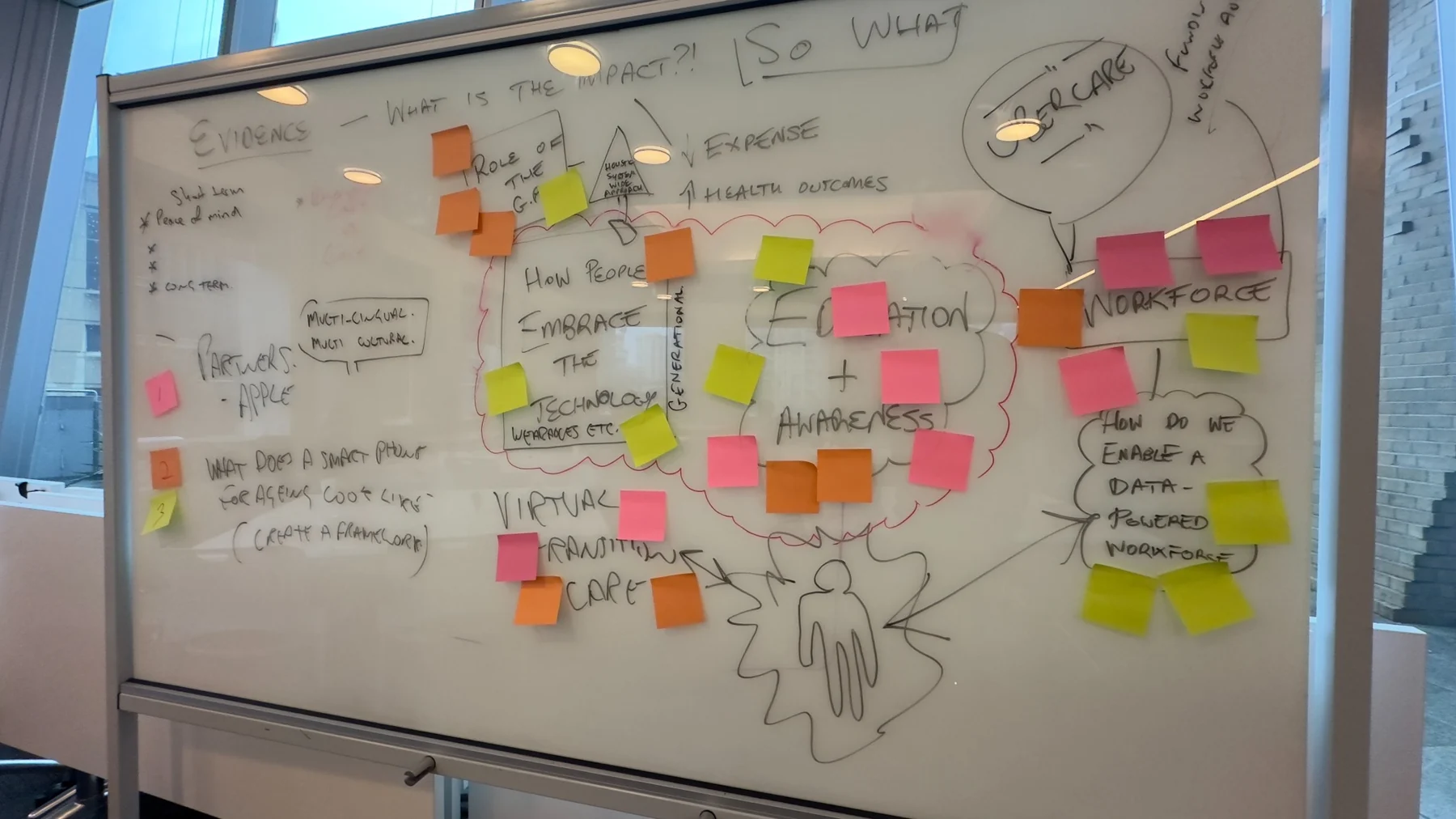
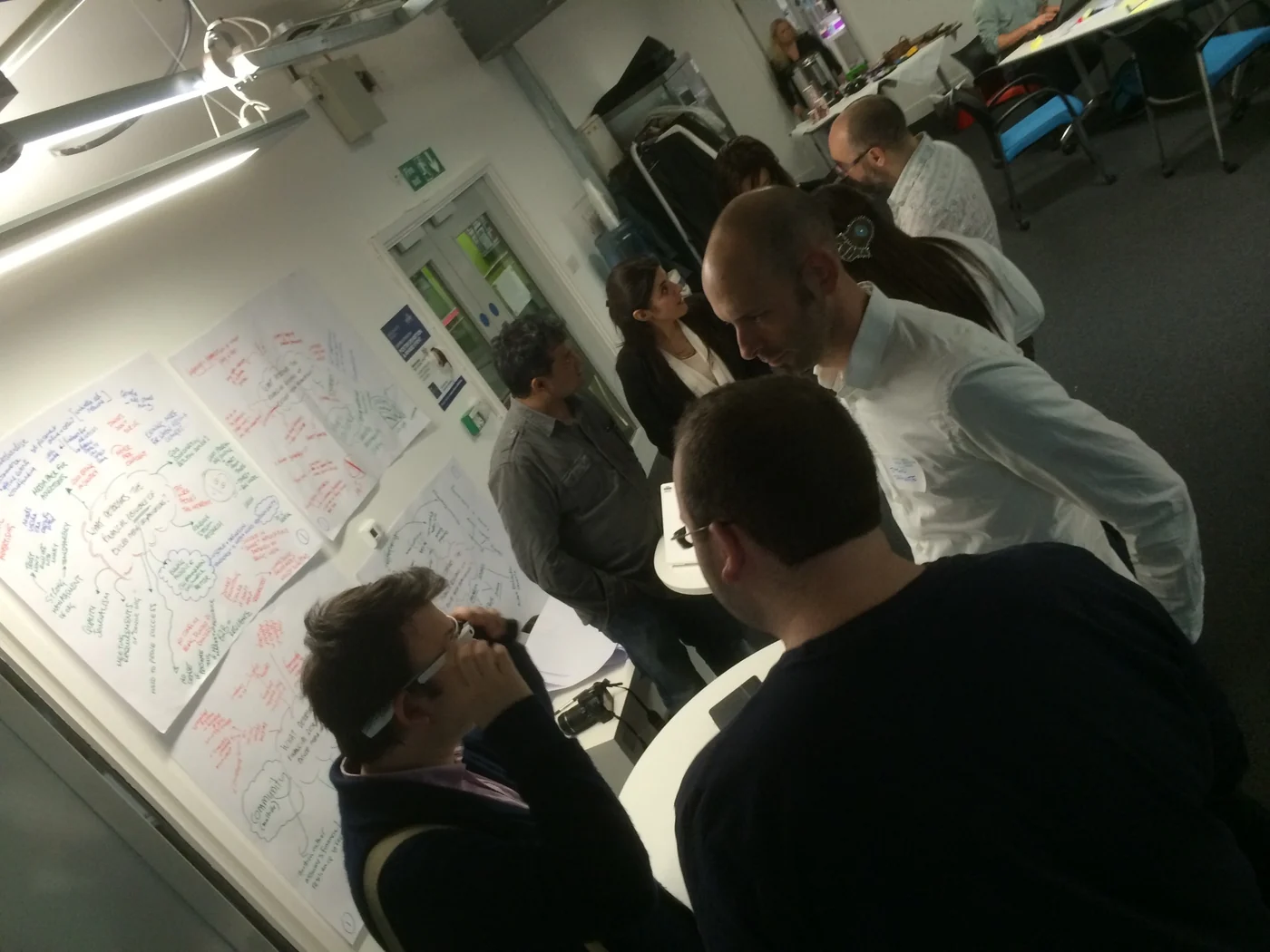
At FASTlab, those gaps become working walls, shared maps, prototypes and eventually governed architectures. The aim is not to remove human judgement, but to make it visible enough to question, explain and carry forward.
Paul Egglestone · working walls · collaborative inquiry · an architecture taking shape
Research translation is not a final act of communication. It is the design of a route from evidence to confident action.
Begin with the decision, the people affected and the conditions in which any answer will have to work.
Bring tacit knowledge, competing interpretations and the judgements already shaping the evidence into view.
Map relationships until people can see not only the pieces, but how the whole is holding together — or failing to.
Preserve provenance, uncertainty, ownership and decision rights as understanding moves into a system or application.
Turn what has been learned into a decision, prototype, capability or pathway that can be tested in the real world.
The purpose of the architecture is not to remove complexity. It is to help understanding survive the journey into action.
Mario helps us see. Jon helps us listen. Craig helps us question the frame. Paul helps what is discovered become shared structure, trustworthy decisions and practical action.
Practice makes complexity perceptible. Evidence intelligence makes it trustworthy. Research translation makes it usable.
The methodology
Drawing is often where we begin. The discipline is broader: use the practice that allows the pattern to become perceptible.
Mario Minichiello · woodcut · reportage illustration · observation as evidence
The reportage illustrator at work in a market — this is not a decorative image. It is a record of a specific method: enter the situation, observe carefully, draw what you see before you decide what it means.
The FASTlab Evidence Intelligence Engine is built on exactly this discipline. Every Knowledge Object begins as an observation. Every relationship begins as a question. Every decision threshold begins as a judgement about what matters.
Engineering governs and scales those judgements. It does not replace them. It could not.
Creativity is not decoration. Creativity is how FASTlab understands complexity — before engineering makes that understanding trustworthy.
We learn publicly
The founders
FASTlab was founded on the belief that solving complex problems requires more than technical expertise. It requires curiosity, creative practice, research rigour, systems thinking and the ability to communicate ideas clearly to the people who must act on them.
Mario Minichiello brings creative inquiry, visual systems thinking and the discipline of the reportage illustrator — the conviction that you must look carefully, and draw what you see, before you claim to understand.
Paul Egglestone brings research translation, evidence architecture, and two decades of experience turning complex information into decisions that actually reach people — first as a broadcaster, then as a researcher and system builder.
Together these disciplines create a way of working that is unusual, deeply collaborative, and difficult to replicate.
FASTlab researchers extend the founding methodology through other forms of practice. Composer and sound artist Jon Drummond brings listening, temporality and human–machine collaboration. Media researcher Craig Hight brings documentary inquiry, audience interpretation and the discipline of questioning how realities are framed and trusted.
Ready to work together?